
 By
By 
Walk through any modern industrial facility and you can feel it: efficiency is no longer just a buzzword, it is the backbone of survival. With skyrocketing energy prices, global supply chain crunches, and relentless competition, how can architects and developers squeeze every ounce of productivity from their buildings? The answer starts long before ground is broken.
Key Principles of Efficiency in Industrial Building Design
Defining Efficiency: Energy, Space, and Workflow
Efficiency in industrial building design is a multi-dimensional puzzle. It is about minimizing wasted space so that every square meter contributes to production, optimizing energy use without sacrificing comfort, and ensuring workflows remain seamless from receiving to shipping. Each decision, from ceiling height to insulation type, ripples through the entire operation.
Balancing Cost with Performance: Initial Investment vs Long-Term Savings
The temptation to focus solely on upfront construction costs often overshadows the real question: what is the total cost of ownership over 20 or 30 years? Investing in better insulation or advanced automation systems can pay off significantly by slashing utility bills and maintenance expenses down the road. Striking the balance between initial outlay and lifecycle performance is where true value is found.
Comparing Design Approaches for Industrial Facilities
Choosing between traditional and modular construction methods, or deciding whether to pre-fabricate off-site, can drastically impact both timelines and budgets. Traditional builds offer flexibility but may bog down in weather delays and on-site challenges. Modular construction speeds things up, with predictable quality and less disruption to surrounding operations.
| Construction Method | Speed to Completion | Quality Control | Flexibility | Typical Cost |
|———————-|——————–|—————-|————-|————–|
| Traditional | Moderate | Variable | High | Moderate |
| Modular/Pre-Fab | Fast | High | Moderate | Usually Lower|
Orientation and layout are far from cosmetic details; they dictate how naturally light flows, how easily materials move, and even how much energy the building consumes every year. A well-thought-out floor plan can trim hours from daily logistics and keep utility expenses in check.
Material Choices and Their Influence on Efficiency
Selecting sustainable materials is not just environmentally responsible, it can also be financially savvy. Advanced composites and recycled materials often provide superior thermal performance and durability, cutting costs on heating, cooling, and repairs.
| Material Type | Thermal Performance | Durability | Maintenance Needs | Sustainability |
|———————|——————–|—————|——————|—————|
| Concrete | Medium | High | Medium | Moderate |
| Steel | Low | Very High | Low | Low |
| Insulated Panels | High | High | Low | High |
Superior insulation means less heat loss in winter and reduced heat gain in summer, directly impacting utility bills and the comfort of employees. Long-lasting materials require fewer replacements, reducing the downtime and disruption that come with repairs.
Integrating Technology to Enhance Building Performance
Automation is transforming industrial spaces. Smart building systems monitor temperature, lighting, air quality, and equipment health in real time, making manual controls nearly obsolete. With advanced energy management tools, facility managers can pinpoint inefficiencies instantly, instead of relying on periodic audits that miss critical trends.
Data centers and high-tech manufacturing require specialized solutions, precise environmental controls, backup power, and robust cybersecurity infrastructure. These features not only ensure reliability but also contribute to the overall efficiency and resilience of the operation.
Workflow Optimization Through Architectural Design
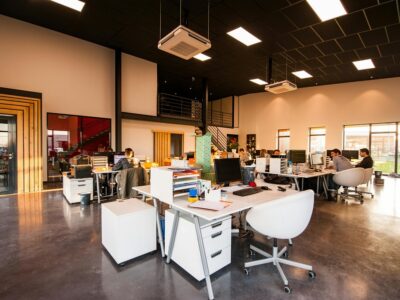
Open floor plans can boost flexibility and collaboration, but they may increase noise and complicate environmental zoning. Segmented spaces, on the other hand, offer dedicated zones for distinct functions, which is vital for industries with strict hygiene or contamination controls.
Loading dock placement often makes the difference between frictionless logistics and daily frustration. Designs that minimize cross-traffic and provide direct routes for inbound and outbound goods streamline operations and limit unnecessary handling.
Employee comfort is not a luxury; it is an efficiency multiplier. Natural light, when harnessed effectively, cuts lighting costs and lifts morale. While artificial lighting is essential for long shifts or windowless spaces, a smart blend of both creates optimal working conditions.
Sustainability Strategies and Regulatory Considerations
Green building standards such as LEED push designers to consider every aspect of efficiency, from energy use to water conservation. While LEED sets a global benchmark, other certifications and local codes in Québec and Montréal may provide unique incentives for renewable energy adoption, including solar and geothermal systems.
Navigating these regulations is complex but essential, especially for firms operating multiple facilities across jurisdictions.
Case Studies: Successful Industrial Building Designs
Distribution centers face a constant trade-off between speed and capacity. Designs that prioritize direct truck access and automated sorting often outperform traditional layouts focused solely on storage density. Pharmaceutical facilities, dealing with stringent cleanroom requirements, rely on innovative partitioning and air handling to maintain both purity and throughput. In the food industry, every design decision is a compromise between hygiene and operational speed, solutions that deliver both are rare and highly sought after.
Future Trends in Industrial Building Efficiency
Materials that self-heal, robotics that adapt layouts overnight, and AI-driven building management systems are no longer science fiction. As industry needs evolve, flexibility in design will be essential. Tomorrow’s industrial buildings must balance permanence with the ability to pivot, ensuring that efficiency is not just built in, but built to last.
For those seeking expert guidance on integrating these strategies, consulting with an experienced architecte industriel Stendel + Reich can offer valuable insight and tailored solutions for complex industrial projects. In the end, efficiency is not a single choice, but the outcome of hundreds of smart decisions, each one shaping the future of industrial performance.






Comments